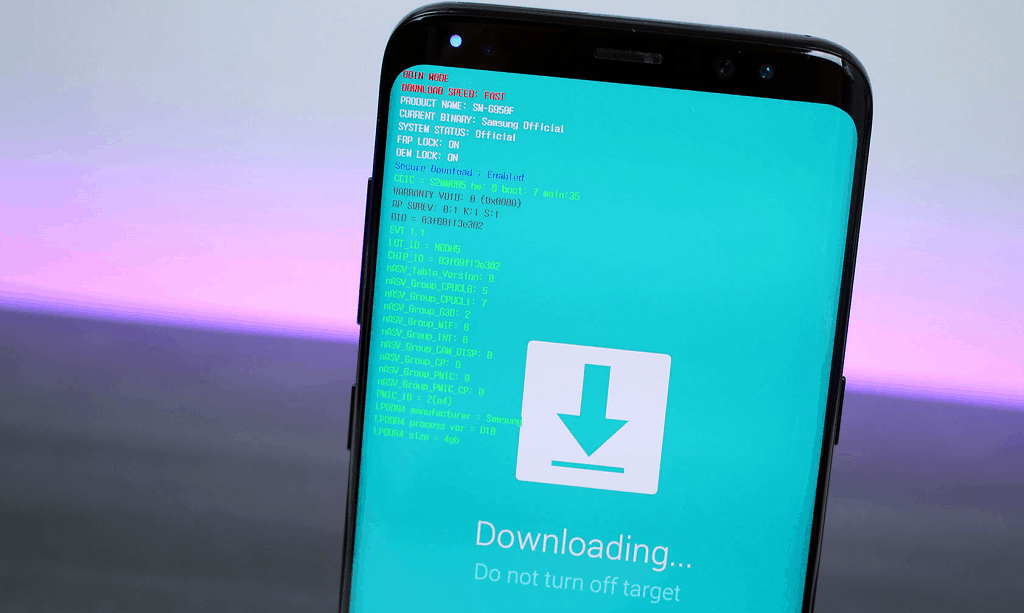
Firmware Update Mode
More default settings for Acrobat PDF The new option in the external discussion in PDF edition gives you the ability to set the default default option. Pinnacle Studio Ultimate (x86 / x64) + package contents The best video editing software. Basic settings are automatically created whenEdit text, even if it passes through columns. In addition, you have final ways and much more. Crack wiggles pl torrent.
Contents. Entering DFU Mode Apple TV. Plug the device into your computer using a Micro-USB cable.
DFU or Device Firmware Upgrade mode allows all devices to be restored from any state. It is essentially a mode where the BootROM can accept iBSS. Update the Firmware in Your ESP8266 Wi-Fi. The firmware 'updates' and tools that are available from. This will be used to start the device firmware upgrade mode. DFU stands for Device Firmware Update, and it’s the deepest type of restore you can do on an iPhone. An Apple lead genius taught me how to put iPhones into DFU mode.
Force the device to reboot by holding down the 'Menu' and 'Down' buttons simultaneously for 6-7 seconds. Press 'Menu' and 'Play' simultaneously right after reboot, until a message pops up in, saying that it has detected an Apple TV in Recovery Mode. IPad, iPhone 6s and below, iPhone SE and iPod touch. Connect the device to a computer using a USB cable. Hold down both the Home button and Lock button. After 8 seconds, release the Lock button while continuing to hold down the Home button. If the Apple logo appears, the Lock button was held down for too long.
Nothing will be displayed on the screen when the device is in DFU mode. If open, iTunes will alert you that a device was detected in recovery mode. If your device shows a screen telling you to connect the device to iTunes, retry these steps. IPhone 7 and iPhone 7 Plus. Connect the device to a computer using a USB cable. Hold down both the Side button and Volume Down button. After 8 seconds, release the Side button while continuing to hold down the Volume Down button.
If the Apple logo appears, the Side button was held down for too long. Nothing will be displayed on the screen when the device is in DFU mode. If open, iTunes will alert you that a device was detected in recovery mode.
If your device shows a screen telling you to connect the device to iTunes, retry these steps. IPhone 8, iPhone 8 Plus and iPhone X. Connect the device to a computer using a USB cable.
Quick-press the Volume Up button. Quick-press the Volume Down button. Hold down the Side button until the screen goes black, then hold down both the Side button and Volume Down button. After 5 seconds, release the Side button while continuing to hold down the Volume Down button.
If the Apple logo appears, the Side button was held down for too long. Nothing will be displayed on the screen when the device is in DFU mode. If open, iTunes will alert you that a device was detected in recovery mode.
If your device shows a screen telling you to connect the device to iTunes, retry these steps. Exiting DFU Mode To exit DFU Mode, simply force restart your device. For Apple TV, hold down the 'Menu' and 'Down' buttons on your remote until the Apple TV reboots. For iPad, iPhone 6s and below, iPhone SE and iPod touch, hold the Home button and the Lock button until the device reboots. For iPhone 7 and iPhone 7 Plus, hold down the Side button and Volume Down button until the device reboots. For iPhone 8, iPhone 8 Plus, and iPhone X, quick-press the Volume Up button, then quick-press the Volume Down button, then hold down the Side button until the device reboots.
Enter True Hardware DFU Mode Automatically The EnterDFU function in the does not enter the true DFU Mode in the hardware. It's possible to enter the true DFU Mode without doing it manually, but it cannot be exited unless a restore is performed, as it creates a. This doesn't work with devices. Steps. Make a copy of a fresh IPSW file. Open the IPSW as a zip folder and browse to /firmware/allflash/allflash.xxxxx.production/.
Extract LLB.RELEASE.img3/im4p and open it in a hex editor. Change some random bit or bits, it doesn't matter which or what you write.
Add the edited file back to the zip, rename zip to ipsw and restore it to your device using iTunes. The restore will error out and your device will be in DFU Mode. Alternative Method If the previous method does not work for you, try this one. Do steps 1 and 2 from above.
Delete LLB.RELEASE.img3. Copy applelogo.img3 to temporary directory. Rename the copy of applelogo.img3/im4p to LLB.RELEASE.img3/im4p. (If you forget the name of the LLB file, you can find it again in the file named manifest.). Copy the renamed applelogo file back to the allflash.xxxxx.production directory.
Rename the zip. Restore the file using iTunes.
(If every thing goes well, you should receive an error 31 from iTunes.) DFU Mode Output to the computer iProduct: 'Apple Mobile Device (DFU Mode)' iSerialNumber: 'CPID:XXXX CPRV:15 CPFM:03 SCEP:03 BDID:00 ECID:XXXXXXXXXXXXXXXX SRTG:iBoot-XXX.X.X' Revisions (0x1222) This is the device ID in the, the, and the. For more information about the protocol, see., and (0x1227) This is the device ID in the, the, the, subsequent 32 bit devices, all 64 bit devices, and. For more information on the protocol, see.
Objective and Rationale This is the author's second article about the ESP8266 integrated circuit, a relatively new chip comprising a full-featured 32-bit RISC µC and a built-in 802.11 b/g/n Wi-Fi circuit. The described using the Arduino IDE to program the ESP8266, and contains some important background information that will not be repeated here. If you haven't read it, please do. There is no shortage of information on the Web about the 8266; in fact, there may be too much.of the wrong type.
The developers of the IC, have apparently chosen to not only outsource manufacturing, but also to avoid being directly involved in the line of ESP modules that utilize the ESP8266 chip. Instead, they offer information and support services via a for those with the patience and persistence to search the maze. Adding to the confusion is the existence of another forum that, despite being named, doesn't seem to be operated by Espressif. In addition, there is a plethora of resellers, video bloggers, and writers that also offer information that runs the gamut from good to confusing to totally wrong. ESP modules are available from a variety of sources, and the firmware contained in the ESP8266 chips on the modules is almost always outdated and often of questionable origin. The firmware 'updates' and tools that are available from these same sources are also sometimes suspect.
Consequently, it is the aim of this article to document a procedure for downloading the latest available firmware directly from Espressif and installing it on an ESP8266 using the flash tool provided by Espressif. Hardware Setup In order to update the firmware on any ESP8266, it is necessary to have it properly powered and connected to a PC.
In addition, a means of resetting the IC and putting it in the download mode must be provided. The schematic diagram and photograph below show the recommended setup; note that the wire colors in the schematic correspond to the wire colors in the photograph. As you see, it is based on an ESP-01 module, but the same connections will work with other modules so long as the same ESP8266 I/Os are used as shown in the schematic diagram. For additional details, see this. Editor's note: A more reliable flashing circuit is available, and should be used instead of the circuit described in this article. PuTTY Terminal Program Once the hardware setup is complete, the next step is to power up the ESP8266 and attempt to communicate with it. A simple terminal program is required and the following procedure uses PuTTY, a free program available.
You can use another terminal program, but you will have to make allowances for any differences between it and PuTTY. Open PuTTY, and click the Serial radio button. Enter the COM port number (which must be less than 10) and the baud rate (which will most likely be 115200 or 9600.) In the small Saved Sessions window, enter ESP8266, and click the Save button. The PuTTY window should be similar to the picture below.
Click the Open button, and a PuTTY terminal session window should open. Enable Caps Lock on your PC, and type AT, but don't press Enter. You should see AT in the PuTTY terminal window. If you don't, you may have selected the wrong COM port or the wrong baud rate. Close PuTTY and start again at the top of this section. The permissible baud rates are: 9600, 19200, 38400, 74880, 115200, 230400, 460800, and 921600; try each one in turn until you find the one that works.
When you see AT in the PuTTY terminal window, while holding the Ctrl key down, press the M key followed by the J key. Release the Ctrl key. You should see OK in the PuTTY terminal window as shown in the picture below. Note that if you make a typing mistake while in the terminal session window, it may not be possible to successfully correct the mistake. Rather than try to edit out your mistake, it is often better to simply hold down the Ctrl key, and press the M key followed by the J key, which will generate an Error message. Then, you can start again and type the correct input.
When you see that first OK message, you have cleared a big hurdle. Then you know that your hardware setup is correct, the ESP module is functional, you have selected the correct COM port, and you have chosen the correct baud rate. Close the PuTTY terminal session window, and click OK when PuTTY asks if you are sure. Now, reopen PuTTY, select the ESP8266 saved session, and click the Load button. This should place your previously determined COM port and baud rate settings in the appropriate windows.
Click the Open button, and a new PuTTY terminal session window will open. Enable Caps Lock on your PC, and type AT, but don't press Enter. You should see AT in the PuTTY terminal window. Type a + sign followed by GMR. When you see AT+GMR in the PuTTY terminal window, while holding the Ctrl key down, press the M key followed by the J key. Release the Ctrl key. You should see the ESP8266 firmware information in the PuTTY terminal window similar to that shown in the picture below.
In the first line above, you see the AT+GMR command that you typed. As you may know or have guessed, the command scheme that you are using to communicate with the ESP8266 is called an 'AT command set' because all the commands begin with the letters 'AT.'
Unfortunately, there are many different versions of AT command sets; they all contain some of the same commands, but there are many AT commands that are not standard among all AT command sets. Even within the ESP8266 community, there are a number of versions. The second line above indicates that this particular 8266 device is programmed with firmware that uses version 0.25.0.0 of the AT commands. Somewhere there is a document that defines the commands that are included in version 0.25.0.0, but without that document you must use trial and error to determine the AT commands that work. That is a very tedious process at best, but fortunately there is a solution to the dilemma that will be explained shortly.
Line three identifies the Software Development Kit (SDK) version that was used for this particular ESP8266 as version 1.1.1. Each SDK also includes an AT command set that is part of the firmware, and that is suited for controlling that firmware.
Ostensibly, AT version 0.25.0.0 works with SDK version 1.1.1. But still one needs the document that describes AT version 0.25.0.0 in order to know what commands are included. There is a better way as described in the next section of this article, but before you go there, try another AT command to see what happens. Enable Caps Lock on your PC, and type AT+CWLAP. When you see AT+CWLAP in the PuTTY terminal window, while holding the Ctrl key down, press the M key followed by the J key.
Release the Ctrl key. After a few seconds, the terminal window should look similar to the photo below. AT+CWLAP has commanded the ESP8266 to list all the Wi-Fi access points within its range.
In the case above, two access points were found: one is called 'ATT936' and the other is called 'tracecom 2.4.' Your results will, of course, be different and should include your own Wi-Fi network plus those of any of your very close neighbors. Close the PuTTY terminal session window, and click OK when PuTTY asks if you are sure. ESP Flash Download Tool Although it's rarely mentioned on the Web, Espressif, the designers of the ESP8266 integrated circuit, have created a specific piece of software to update the firmware in their chips. It's the ESP Flash Download Tool, and it's available. Download, extract, and install the latest version on your PC; as of this writing it's FLASHDOWNLOADTOOLSv2.4150924.rar.
Start the tool, and you should see two windows open: a GUI window with places for you to enter information, and a terminal-like window that logs the actions taken. A few things are worth noting, but are not reasons for concern. The GUI window is identified as V2.3 while the log window is identified as V2.4.
Apparently the GUI window is mislabeled. The GUI window COM port and baud rate may contain data. The GUI window address boxes may contain data. The log window may contain data.
Getting the Latest Firmware Espressif has a page where they post the latest firmware available. Go to, click on the SDKs entry under Downloads, and then click on 'latest release' under Announcements.
As of today, 28 Oct 2015, you will see a page that includes the following. The latest release of the Non-OS SDK (Software Development Kit) is what you want, and it would seem that you could click just under 'Latest Version: 1.4.0' and get the latest version. But that's not quite right; notice that there is a patch available identified as espiotsdkv1.4.1151022.
It's not really a patch; it's a corrected version of version 1.4.0, and was released on 22 Oct 2015. You want that and the ATv0.50 bin files. Click on each of those in turn and download the files; you can save them wherever you want, but they are fine in the Downloads folder. Of course, by the time you read this, there may be later SDK releases and their locations may be altered, but at least you know where to look.
Just be sure that you read carefully to be sure you are getting the very latest version. As you have seen from the preceding, it's not always obvious. You may have noticed that there is a section for downloading documents. They all contain good information, but sometimes there is a substantial loss in the translation from Chinese to English. For now, be sure to get the latest versions of and; both are currently at version 1.4.
Installing the Firmware Start the ESP flash download tool and make sure that none of the boxes at the top left of the GUI window are checked. Enter the COM port you are using, and a baud rate of 115200 in the boxes near the bottom of the window. Note that as you enter data, it is recorded in the log window. Power up your ESP programming setup, and connect it to your PC. Press and hold the Reset button, and then press and hold the Flash button. Release the Reset button, and then release the Flash button. Click the START button in the flash download tool GUI window.
The flash download tool should check the ESP8266 in your setup, and produce a report similar to the pictures shown below. Press and release the Reset button on you programming setup to exit the ESP8266 download mode and resume normal operation. Notice that the GUI window now contains information about the ESP8266 including the size of the flash memory (8Mbit in the example,) the crystal frequency (26MHz in the example,) and two MAC addresses for the chip. The same information is contained in the log window.
Next, click the box in the GUI window labeled 'SpiAutoSet,' which will cause the download tool to automatically select the correct flash size and crystal frequency. Now, you need to select the files to be installed in the ESP8266 and set the starting memory address for each file. There are four files that must be correctly installed in order to update your ESP chip.
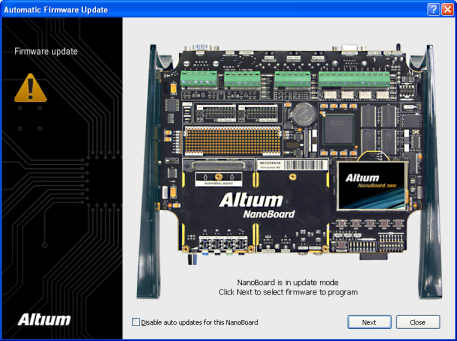
Firmware Update Mode Adtran 3120
Open the Espressif IOT SDK User Manual and find the section on writing images into flash. In version 1.4 of the manual, it begins on page 20. Next, locate the part that describes the version that supports Cloud Update (FOTA,) and within that part, find the table that pertains to the flash size in your ESP8266. In the example, the flash size is 8Mbits which is equal to 1024KB, so table 2 on page 25 of the manual provides the information needed for the example. See the picture below. The four files needed are: espinitdatadefault.bin, blank.bin, boot.bin, and a user1.bin file.
The address at which each file is to be installed is shown next to the file name. The first three of the required files are located in the espiotsdkv1.4.1151022 folder you previously downloaded from bbs.espressif.com, and the fourth is located in the ATv0.50 bin files. Navigate to where those downloaded files are, and copy each one into one of the blanks at the top of the Flash Download Tool GUI window; enter the correct address for each file in the blank next to the file name. Follow these steps for each file.
Click inside a file 'set firmware path' space. Button to the right of the space.
Navigate to the location of the desired file and click the file. The GUI will automatically enter the file name in the space.
Enter the correct address (from the table) for each file. Note that the files to be flashed may not be exactly the same as those listed in the table, but will be a close variant. With a little examination and applied logic, the correct files should be readily apparent.
Now, click the four check boxes to the left of each file name. The Flash Download Tool GUI window should be similar to the picture below. Double check the addresses against the table. On your ESP programming setup, press and hold the Reset button, and then press and hold the Flash button. Release the Reset button, and then release the Flash button. Click the START button in the Flash Download Tool GUI window. The download should begin, and its progress should be shown in the Flash Download Tool GUI window and the log window, as depicted below.
As shown above, a successful flash operation will result in all the files being sent to the ESP8266, and the COM port closed. Checking for a Successful Flash When the flash operation is complete, close the Flash Download Tool. Remove power from the ESP programming setup, and then reconnect the power. Reopen PuTTY, select the ESP8266 saved session, and click the Load button. This should place your previously determined COM port and baud rate settings in the appropriate windows.
Click the Open button, and a new PuTTY terminal session window will open. Enable Caps Lock on your PC, and type AT, but don't press Enter. You should see AT in the PuTTY terminal window. Type a + sign followed by GMR. When you see AT+GMR in the PuTTY terminal window, while holding the Ctrl key down, press the M key followed by the J key. Release the Ctrl key. You should see the ESP8266 firmware information in the PuTTY terminal window similar to that shown in the picture below.
As you can see, new firmware is evident in the ESP8266. It has been updated from SDK version 1.1.1 to SDK version 1.4.0. In addition, the corresponding 0.50.0.0 version of the AT command set has also been installed, and is documented in ESP8266 AT Instruction Set, Version 1.4.
Close the PuTTY terminal session window, and click OK when PuTTY asks if you are sure. Last Words With a couple of practice sessions, the entire firmware flash process can be completed in much less time than it takes to read this article. Once it's done, you can be confident of what is inside your 8266, and can focus on your Wi-Fi project instead of 'guessing and hoping' about the ESP firmware and the necessary AT command set. Next Article in Series. Figured I would check this method out as the last one didn’t work for me. Included a copy of the output from Coolterm below. BTW I get the memory error on all my modules?
AT OK AT+RST OK WIFI DISCONNECT ets Jan 8 2013,rst cause:2, boot mode:(3,6) load 0x40100000, len 1396, room 16 tail 4 chksum 0x89 load 0x3ffe8000, len 776, room 4 tail 4 chksum 0xe8 load 0x3ffe8308, len 540, room 4 tail 8 chksum 0xc0 csum 0xc0 2nd boot version: 1.4(b1) SPI Speed: 40MHz SPI Mode: QIO SPI Flash Size & Map: 8Mbit(512KB+512KB) jump to run user1 @ 1000 CUMEM CHECK FAIL!!! D$Csz Ai-Thinker Technology Co. Ready WIFI CONNECTED WIFI GOT IP AT+GMR AT version:0.25.0.0(Jun 5 2015 16:27:16) SDK version:1.1.1 Ai-Thinker Technology Co. Jun 23 2015 23:23:50 OK flash tool output load config. EFUSEMODE: 1 load config. Thank you for saving my tomorrow since today I lost it trying to find an answer to how to update the ESP. Your tutorial worked perfectly though I have seen some inconsistencies in what the TOOLV2.3 says and what the com port outputs.
The tool says that the ESP01 is an 8Mbit but the com say that SPI Flash Size & Map: 32Mbit(512KB+512KB). Could this be that I have an 32Mbit flash?
Ready AT+GMR AT version:0.50.0.0(Sep 18 2015 20:55:38) SDK version:1.4.0 compile time:Sep 18 2015 21:46:52 OK ets Jan 8 2013,rst cause:2, boot mode:(3,7) load 0x40100000, len 1396, room 16 tail 4 chksum 0x89 load 0x3ffe8000, len 776, room 4 tail 4 chksum 0xe8 load 0x3ffe8308, len 540, room 4 tail 8 chksum 0xc0 csum 0xc0 2nd boot version: 1.4(b1) SPI Speed: 40MHz SPI Mode: QIO SPI Flash Size & Map: 32Mbit(512KB+512KB) jump to run user1 @ 1000 don’t use rtc mem data Thank you again. Hi Charles, thank you for posting this tutorial. I am using the ESP-01/Arduino IDE setup to flash the firmware because I wish to join a WPA2-Enterprise network. I have a problem with your instruction: “Press and hold the Reset button, and then press and hold the Flash button. Release the Reset button, and then release the Flash button.” There are no such buttons on the ESP module and only one reset button on the Arduino.
Can you please elaborate on this instruction? I am able to communicate with the ESP module and connect to a home wifi network. I now have the GPIO0 pin connected to GND to set it to flash mode however your step is confusing me.
These are the buttons wired onto the breadboard - see the first image in the article (and which is described in Charles first article he linked above) When you release the button (or take away the connection to ground in your case) the ESP will be in flash mode and will accept the files. This is also true when uploading code from the Arduino IDE.
If you wire up a breadboard similar to the example in the article it makes life much easier to program the ESP. I also found that it can sometimes take a couple of resets of the chip before it starts behaving appropriately. Picopi I agree that flash process is very cumbersome. It too days for me to work out exactly how to do it. I no longer have the hardware set up for flashing ESP modules, but I can assure you that the procedure worked just as I described it in the article. Apparently, Expressif no longer makes espiotsdkv1.4.1151022 available for downloading, so your best bet will to download the latest SDK.
Here are the instructions for that. Go to Under Downloads, click on SDKs Under SDKs, click on Latest Release ESP8266 SDK Under Non-OS SDK including mesh, click on Click to Download Download the zip file. Unzip the files. Follow the instructions in the article, but substitute the corresponding files that you just unzipped.
I hope that helps. If you are using PUTTY, you must type the AT commands exactly as described in the article. “When you see AT in the PuTTY terminal window, while holding the Ctrl key down, press the M key followed by the J key.
Release the Ctrl key. You should see OK in the PuTTY terminal window as shown in the picture below.” 2. No special USB-TTL converter is required. If you are seeing a response from the ESP-01 in PUTTY (or any terminal window) then your USB-TTL converter is working. Thanks for your comment. I’m finding this patch business very confusing. If you go to the latest release (right now is v1.5.2) you do find a patch mentioned, but no ATv.x bin files.
Just a patch that has a few.a lib files - no idea what to do with that. Also, in v1.5.2 in the bin/at folder there are two bin files for user1 user2 what’s that about?
Lastly, when I use AT+GMR, all I get is “-AI03” - nowhere near the output you showed with AT, SDK version and vendor info. Can you shed some additional light on all this? Just a quick question to make sure I understand things regarding the firmware: When I buy an ESP8266, say the esp8266-01 it has firmware in there already that alows me AT commands and to use it as say a WiFi shield to my Arduino. I can use the Arduino environment to upload programs to that same module so it will act stand alone. But after I have uploaded an Arduino program, the original firmware is replaced and I cannot use it with AT commands anymore, nor as a WiFi shield.
For that I have to reflash the original firmware again as explained in your article. Is that a correct assumption? For the folks that have been having trouble following this tutorial I would like to share one thing that made a huge difference in my own results.
You may be able to reflash and use your ESP device just using the power supplied by the UART adapter as shown in the authors breadboard photo. In my own case I was getting sporadic results, one time it worked the next no worky.Until I added a second 3.3 v supply and powered the ESP with that instead of the UART. Just be sure to make a connection between the ground of the UART and the second supply. Once I did that everything just seemed to work with repeatable results and much less hair pulling. Many thanks for this detailed tutorial it’s helping a lot. A little fix for your article and a useful reference: You say “the flash size is 8Mbits which is equal to 1024KB”.
It’s misleading and confusing as abbreviation for kilobit and kilobyte is same “KB”. 8Megabits is equal to 1000Kilobits. By the other hand the 1024 value makes me believe it’s referring to Kilobytes and how memory is allocated in the EEPROM (in 1024KB blocks). These misleading references are a common place for these “exotic” parts.
As example mine ESP-01 cames with EEPROM labeled as BergMicro, the page )/ says for this EEPROM: “80, 80A = 8Mbit (1024kx8)”, again, misleading. Logic says to me that eight blocks of 1028Kbytes forming a 8Mbytes EEPROM but with the crossed references now I’m not sure if what I have is a 1 or 8Mbytes EEPROM. Anyway, that’s, 1024 refers to how memory blocks (and consequently the right addressing that’s show on the table), is disposed on the EEPROM. Many thanks for this detailed tutorial. It’s helping a lot. A little fix for your article and a useful reference (for common EEPROM chip): You say “the flash size is 8Mbits which is equal to 1024KB”. It’s misleading and confusing as abbreviation for kilobit and kilobyte is same “KB”.
8Megabits is equal to 1000Kilobits. By the other hand the 1024 value makes me believe it’s referring to Kilobytes and how memory is allocated in the EEPROM (in 1024KB blocks). These misleading references are a common place for these “exotic” parts. As example mine ESP-01 cames with EEPROM labeled as BergMicro, the page )/ says for this EEPROM: “80, 80A = 8Mbit (1024kx8)”, again, misleading. Logic says to me that its eight blocks of 1028Kbytes forming a 8Mbytes EEPROM but with the crossed references now I’m not sure if what I have is a 1 or 8Mbytes EEPROM. Anyway, that’s, 1024 refers to memory blocks size (and consequently the right addressing that’s show on the table), are disposed on the EEPROM.
Charles, Thanks a bunch. Your first article got me going after weeks of near-success with other venues though flaky outcomes.
I’m especially enjoying using the example code found in the Arduino IDE found with your help. I’m trying to follow the this second article but have a couple of questions that the Espressif documentation doesn’t address: 1. Is my ESP8266-01 the same as the ESP-Launcher referred to by the Getting Started Guide? Do you need to use VirtualBox emulator if using Windows OS?
Again indicated by Espressif 3. The current listing of available firmware versions is confusing. It appears to me that V1.5.3.3 is the latest (as of 7/19), though not the selection at the top of the list. Is this the one I should use? Thanks again for your careful and complete work! Thanks for the article. I went through your first post with the Arduino, and wifi detector.
It went great. Now I’m on this one, and I can’t get the AT to come up at all in the Putty window. I can run the wifi detector from the first article, open putty, and it displays all the wifi devices found. Which tells me putty appears to be working fine.
I’ve played around with all the settings in the keyboard part too. Any ideas on why I can’t get the AT to work? I’ve tried every baud rate too. Thanks in advance. Hey, was wondering if someone could help/direct me to a link on how the configuration address are supposed to be!
Downloaded the lastest version of this esp8622-01 but for the love of God, thought a readme file would be there stateting the address/location. So am kinda stuck googled for a solution, tried some address but with no help. Ps using nodemcu to flash the firmware. This files were in the bin folder: Blank.bin bootv1.2.bin bootv1.6.bin espinitdatadefault.bin Thanks in advance. Just registered myself to this forum because I had to go through the excercise of doing the FW upgrade and ran into an issue.
It is important to understand the address part. As much as the procedure is cumbersome, after doing it once, it’s easy. After doing the FW update, the blue LED started to blink quickly non-stop. That was caused by invalid addresses provided in the FW tool.
But since I am new to this device, here’s my two cents worth on how to get this thing going. I am using a an FTDI USB-to-TTL 3.3V smart cable. The one I have is from DigiKey and is p/n 768-1015-ND. When you connect it to your PC, install the driver (should be done automatically). It is important to note which COM port it is using (You can see it in windows Device Manager - Ports (COM & LPT) - USB Serial Port (COMx). Then the ESP8266 dev board I got is p/n 1568-1235-ND also from DigiKey. On this dev board, looking from the top (component side) with the antenna at the bottom, pins are the following: 1 3 5 7 1: 3.3V 2 4 6 8 2: Serial RX in 3: Not used (in my device) IC1 IC2 4: Used for FW upgrade 5: Chip enable (when high) 6: Not used (in my device) 7: Serial TX out 8: GND On pin 1, connect a 3.3V power source.
DO NOT USE THE RED WIRE ON THE FTDI CABLE AS THIS IS 5V. On pin 8, connect the GND signal from that power source as well as the FTDI cable’s black wire. On pin 2, connect the orange wire from the FTDI cable.
The orange wire is FTDI TX. On pin 7, connect the yellow wire from the FTDI cable. The yellow wire is FTDI RX. Between pins 1 and 5, tie a 4.7K resistor. This will maintain the CHIP ENABLE high when powered-on. Between pins 5 and 8, tie a push-button N.O. This will be used to pull CHIP ENABLE low to make it reset.
Actiontec Modem Firmware Update
Between pins 4 and 8, tie a push-button N.O. This will be used to start the device firmware upgrade mode. Before continuing any further, make sure that the reset switch works. The firmware upgrade switch you will know it works when you try to perform an upgrade. The only program I was able to use to communicate with the module through the USB cable is.
Firmware Update Mode Plc
TeraTerm only displyed garbage data and puTTY did not return anything (most likely some configuration issue). Once you power-up the unit, the red LED will be ON. Make sure you see displayed on the screen. You may type in order to see the current configuration. In my case, before the FW upgrade, it says: AT version:0.40.0.0 (August 8 2015) SDK version:1.3.0 Build: 1.3.0.2 OK My device is a 512KB x 512KB device 8Mbit device. Not sure exactly what I did to find this out but that’s what it is.
At the time of doing this procedure (May 11th 2017), the FW available was ESP8266NONOSSDK-2.1.0. Close your terminal program if it is running. Run the ESP8266 DOWNLOAD TOOL.
In my case, it was 3.4.4. The COM port is COM50 and the speed is 115200. As stated in the initial post, press and hold the RESET button, press and hold the FW UPGRADE button, release RESET and release FW UPGRADE. The device is now in FW upgrade mode. For my device (512KB x 512KB / 8Mbit), I used the following files and addresses: 1) C: Espressif Systems ESP8266NONOSSDK-2.1.0 bin espinitdatadefault.bin @ 0x7C000 2) C: Espressif Systems ESP8266NONOSSDK-2.1.0 bin blank.bin @ 0x7E000 3) C: Espressif Systems bootv1.7.bin @ 0x00000 4) C: Espressif Systems user1.1024.new.2.bin @ 0x01000 The other files (masterdevicekey and eagle.app.xxx) were not required in my case. CRITICAL NOTE: If the wrong addresses are entered, although the FW upgrade will look successful, upon completing and reseting the device by pressing the RESET button, the blue LED will blink non-stop quickly. You can simply restart the procedure.
When ready, hit START. When the FW upgrade is complete, hit STOP, close the FW upgrade tool, run the terminal program (Termite in my case) and press the RESET button. If the upgrade is successful, you will see the new FW information when typing: AT+GMR AT version:1.4.0.0(May 5 2017 16:10:59) SDK version:2.1.0(116b762) compile time:May 5 2017 16:37:48 OK Enjoy!